Roller Racking
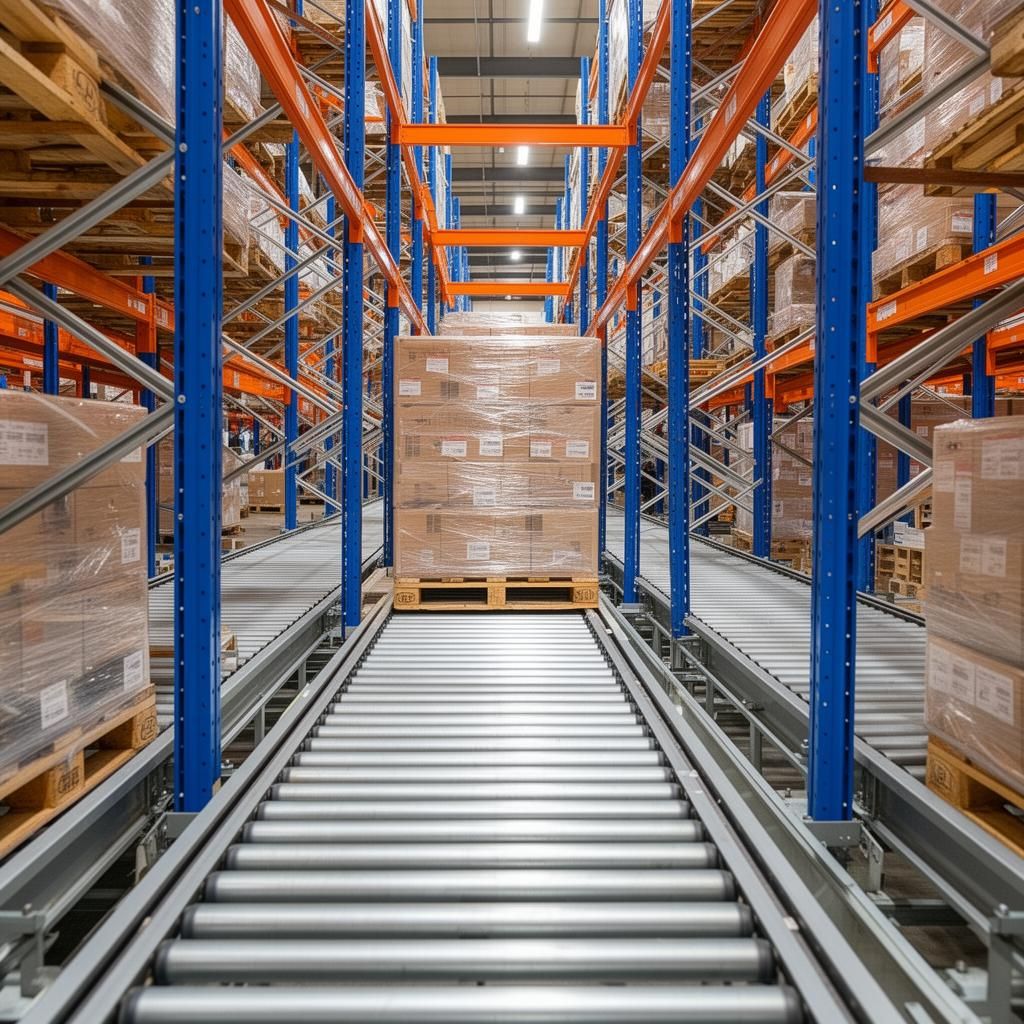
Roller racking systems use gravity-fed roller conveyors within the racking structure for automatic pallet flow. Operatin...
Roller Racking
Roller racking systems use gravity-fed roller conveyors within the racking structure for automatic pallet flow. Operating on a first-in, first-out (FIFO) basis, these systems are perfect for perishable goods, food & beverage, and pharmaceutical warehouses.
- FIFO operation
- Gravity-fed flow
- Perishable goods ideal
- Automatic pallet movement
Overview
Roller racking, also known as pallet flow racking or gravity flow racking, is a dynamic storage system that uses gravity-powered roller conveyors within the racking structure to automatically move pallets from the loading end to the picking end. This creates a true First-In, First-Out (FIFO) storage system that is essential for perishable goods, date-sensitive products, and any inventory that requires strict stock rotation.
The system works on a simple principle: pallets are loaded at the higher end of an inclined roller conveyor lane. Gravity causes the pallets to roll gently forward to the picking face at the lower end. When the front pallet is removed, all remaining pallets in the lane automatically advance by one position, presenting the next pallet for picking.
Roller racking is extensively used in the UAE's food and beverage sector, pharmaceutical distribution, and chemical storage operations. The automatic FIFO rotation ensures that the oldest stock is always picked first, minimizing the risk of product expiration, spoilage, or waste—a critical consideration in the UAE's hot climate where shelf life management is paramount.
System Operation & Mechanics
Roller racking lanes are fitted with steel or plastic roller conveyors set at a gentle incline of 3-5 degrees from the loading end (back/top) to the picking end (front/bottom). The loading aisle is at one end of the system and the picking aisle at the other end, creating a flow-through layout.
When a pallet is placed on the rollers at the loading end, gravity causes it to roll forward until it contacts either the front stop or the pallet ahead of it. Speed controllers (brake rollers or centrifugal governors) regulate the pallet's travel speed to prevent impact damage, typically maintaining speeds below 0.3 m/s.
Separator mechanisms at the picking end hold back the second pallet while the first is being retrieved, preventing multiple pallets from advancing simultaneously. Once the front pallet is completely removed, the separator releases the next pallet, which rolls forward to the pick face.
For pallets that don't flow well on rollers (e.g., non-standard sizes or damaged bases), we can substitute or supplement the rollers with heavy-duty wheel beds or channel guides.
Advantages
Key Benefits
Guaranteed FIFO Rotation
The gravity-flow design ensures the oldest stock is always at the picking face, eliminating the risk of expired or spoiled products remaining in the system.
Automatic Pallet Advancement
No forklift entry required—pallets advance automatically by gravity, reducing labor costs and eliminating structural damage from forklift impacts.
High Density Storage
Lanes can be up to 20 meters deep, providing storage density comparable to drive-in racking while maintaining FIFO operation.
Separate Loading & Picking Aisles
The flow-through design separates inbound and outbound operations, reducing traffic congestion and improving warehouse workflow.
Speed-Controlled Movement
Integrated brake rollers and centrifugal speed governors ensure gentle, controlled pallet movement regardless of load weight.
Ideal for Perishable Goods
Perfect for food, beverage, pharmaceutical, and any date-coded products requiring strict batch management.
Industries & Use Cases
- Food and beverage distribution centers
- Dairy and fresh produce warehouses
- Pharmaceutical distribution
- Chemical product storage
- Brewery and bottling operations
- FMCG distribution centers
- Cold chain logistics
- Manufacturing production line feeding
Technical Details
Food Safety & Compliance
In the food and beverage industry, FIFO stock rotation isn't just a best practice—it's a regulatory requirement. Roller racking provides automatic, guaranteed FIFO rotation without relying on operator discipline or warehouse management system enforcement. This built-in compliance makes roller racking a favorite of food safety auditors and quality managers. Our systems can be configured with lane identification labels, date-code tracking zones, and integration points for barcode or RFID scanning systems.
System Design & Pallet Testing
Every roller racking installation begins with pallet flow testing. We test your actual pallets on our roller conveyor test rig to verify smooth, consistent flow at the correct speed. This testing identifies any pallet quality issues early in the project and allows us to fine-tune roller spacing, brake roller positions, and lane incline for optimal performance with your specific products and pallets.
Frequently Asked Questions
Get Your Storage Solution Today
Contact Racking UAE for the best racking and shelving services in Dubai and across the UAE.
Contact Now